
Some tarot cards push you toward change. The Hierophant pauses and asks a harder question first: what are you already following without noticing?
The Hierophant tarot meaning usually points to tradition, learning, guidance, shared values, and the systems that shape how you think. In tarot, this card often reflects institutions, mentors, rituals, inherited beliefs, or the search for structure that gives life meaning. It can suggest wisdom and support, but it can also ask whether old rules still fit who you are.
That is why this card can feel both steady and uncomfortable. It is not only about conforming. It is about examining what teaches you, what guides you, and what you keep repeating because it once felt safe.
What Does The Hierophant Represent?
At its core, The Hierophant tarot meaning is about learning through frameworks. That can mean religion, family values, cultural norms, education, tradition, therapy, mentorship, or any structure that helps people make sense of life.
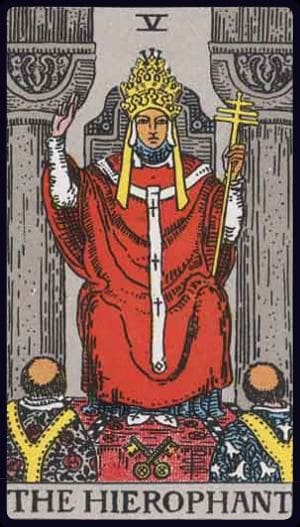
This card often represents:
- guidance from a teacher, mentor, or trusted system
- tradition and established knowledge
- shared beliefs and social rituals
- formal learning and structured growth
- the tension between belonging and independent thought
The central question here is simple: what beliefs are shaping your choices right now?
Sometimes those beliefs help. They give you language, stability, and direction. Other times, they become scripts you follow long after they stop feeling true.
That is where The Hierophant tarot meaning gets interesting. It is not only about rules. It is about your relationship with them.
Symbolism and Key Themes
The symbols around this card often point to authority, teaching, and initiation. In many decks you may see a spiritual figure seated between pillars, wearing ceremonial robes, raising a hand in blessing, with followers or students below.
Those images matter because The Hierophant tarot meaning becomes clearer through them.
Common visual motifs include:
- pillars, suggesting order, structure, and entry into formal systems
- ceremonial robes, pointing to tradition and institutional authority
- a raised hand, symbolizing blessing, teaching, or transmission
- keys, often linked to access, knowledge, and initiation
- followers or acolytes, suggesting shared learning and inherited practice
- sacred books or scrolls, representing codified wisdom
- crowns or layered headpieces, pointing to hierarchy and established roles
A common depiction is someone who does not invent meaning from scratch. He interprets, preserves, and passes it on.
That is the core tension of this card: guidance versus dogma.
You may need support, but not blind obedience. You may want belonging, but not at the cost of your own judgment. You may be ready to learn from tradition, but not live inside it unexamined.
The Psychological Meaning of The Hierophant
Psychologically, The Hierophant tarot meaning often points to the beliefs you inherited before you had the language to question them.
That might include ideas about:
- what makes someone good or respectable
- how love is supposed to look
- what counts as success
- which emotions are acceptable
- who gets to teach and who is expected to listen
This card often appears when you are comparing your inner voice with the voices that shaped you. Family. School. Religion. Work culture. Social expectations. Even self-help language can become a kind of doctrine if you stop questioning it.
Sometimes what tarot told me in moments like this was not that I needed a new answer. It was that I needed to notice whose answer I had been living by.
That is one of the most useful layers of The Hierophant tarot meaning. It can point to wise guidance, yes. But it can also show where borrowed beliefs have quietly become personal limits.
The Hierophant in Love, Career, and Personal Growth
In daily life, The Hierophant tarot meaning often becomes practical fast. It asks where structure is helping and where habit is making the choices for you.
In love
In love readings, this card often points to commitment, shared values, and relationship models shaped by tradition. It can suggest marriage, long-term bonds, or a desire for something recognized and stable.
At the same time, it may raise harder questions:
- Are you choosing this relationship because it fits you, or because it looks right?
- Do your values actually align, or do you just share a script?
- Are you making space for honesty, or only for roles?
In this context, The Hierophant tarot meaning often connects love with values, not just chemistry. That can be grounding. It can also expose where two people are following expectations instead of building something conscious together.
In career
At work, this card often points to institutions, hierarchy, training, and formal pathways. It can show up in corporations, education, law, healthcare, public systems, or anywhere there are rules, credentials, and established methods.
This card may appear when:
- you need a mentor or clearer guidance
- a process or framework can support your growth
- institutional politics are shaping outcomes
- you are deciding whether to follow the standard path or question it
- expertise matters more than improvisation
Sometimes The Hierophant tarot meaning in career is simple: learn the system before you try to change it.
In personal growth
In personal growth, this card often asks what you are practicing, not just what you believe.
That may look like:
- building rituals that support reflection
- examining old family or cultural messages
- seeking wise guidance without giving away authority
- learning within a structure before rejecting it
- deciding which values still feel alive and which feel inherited
This is one reason The Hierophant tarot meaning can feel surprisingly personal. It is not abstract. It lives in habits, rituals, loyalties, and the language you use to explain yourself.
A Real-Life Moment with The Hierophant
Anna had a good job, a stable partner, and a life that looked respectable from the outside. Still, every time someone asked how she was, she felt herself giving the polished version.
Then she pulled The Hierophant and got irritated by it. She already had enough rules. Enough expectations. Enough advice. But the card stayed with her for a different reason. It made her realize she had built her life around being legible to other people. Sensible. Reliable. Impressive. She knew how to succeed inside the system, but not whether the system matched her anymore.
A week later, she started journaling one question every morning: what do I actually believe about a good life when nobody is grading me?
That is where The Hierophant tarot meaning can shift from authority to self-awareness.
What this moment shows:
- The problem is not always tradition itself, but unconscious loyalty to it.
- Structure can help, but it can also hide what you have outgrown.
- Honest reflection often begins when borrowed values stop feeling natural.
When The Hierophant Feels Supportive
This card feels supportive when guidance helps you think more clearly.
You may notice:
- steadier values
- trust in a mentor, teacher, or practice
- comfort in ritual and consistency
- a sense of belonging that does not erase you
In that form, The Hierophant tarot meaning is not restrictive. It is grounding.
When The Hierophant Feels Blocked
This card feels blocked when structure hardens into pressure or performance.
You may notice:
- fear of doing things differently
- guilt around questioning old beliefs
- overreliance on experts or authority
- staying inside roles that no longer fit
Blocked Hierophant energy often sounds respectable on the surface. That is what makes it tricky. It can look like wisdom when it is really avoidance.
Reflection Questions for The Hierophant
A useful way into The Hierophant tarot meaning is through specific questions, not vague spirituality.
Try these:
- What beliefs did I inherit without choosing?
- Which rituals or routines genuinely support me?
- Where am I seeking approval instead of clarity?
- Whose voice shows up when I judge myself?
- What kind of guidance helps me grow without shrinking me?
- Where do I need structure, and where do I need more freedom?
- What am I loyal to, and is that loyalty still honest?
These questions work well in a reflective tarot practice because they move the card out of symbolism and into behavior.
How to Reflect on The Hierophant
The best way to work with this card is to stay concrete. The Hierophant tarot meaning becomes more useful when you connect it to real rules, repeated patterns, and learned values.
Start with three steps:
- Name one belief you live by.
- Ask where it came from.
- Decide whether it still belongs in your life now.
You could journal about family messages, work culture, relationships, education, or spiritual practice. You could also look at which routines calm you and which ones keep you performing. Tarot Told Me is a reflective tarot app designed to help explore situations through symbolism, inner dialogue, and mindful reflection. Used well, tarot journaling is less about finding the “right” meaning and more about noticing which meanings already shape you.
Related Reading
- The Fool Tarot Card Meaning: Beginnings, Freedom & Trust
- The Magician Tarot Card Meaning: Skill, Focus & Personal Power
- The Empress Tarot Card Meaning: Love, Creativity, Abundance
Frequently Asked Questions
What does The Hierophant mean in tarot?
The Hierophant tarot meaning usually centers on tradition, learning, guidance, values, and formal systems of knowledge. It often points to mentors, institutions, or inherited beliefs.
Is The Hierophant a positive or negative card?
It depends on context. The card can be supportive when it brings wisdom and structure, but difficult when it reflects conformity, dogma, or unexamined rules.
What does The Hierophant mean in love?
In love, this card often points to commitment, shared values, tradition, and recognized relationship structures. It can also raise questions about whether a relationship is shaped by real alignment or social expectation.
What does The Hierophant mean reversed?
Reversed, this card is often read as rebellion, nonconformity, distrust of authority, or the need to question rigid beliefs. It can also point to leaving systems that no longer feel true.
How can I reflect on The Hierophant in daily life?
Look at your routines, values, and sources of guidance. Ask what supports your growth, what feels inherited, and what you may be following out of habit rather than conviction.
The Hierophant tarot meaning does not ask you to reject tradition or obey it blindly. It asks you to notice what teaches you, what shapes you, and what deserves to stay. Sometimes the most honest guidance is not a new answer, but a clearer relationship with the beliefs you already carry.