Tarot and Jung: Archetypes, Symbols, and Self-Reflection
Tarot and Jung are often mentioned together because both are concerned with images that feel larger than ordinary explanation.
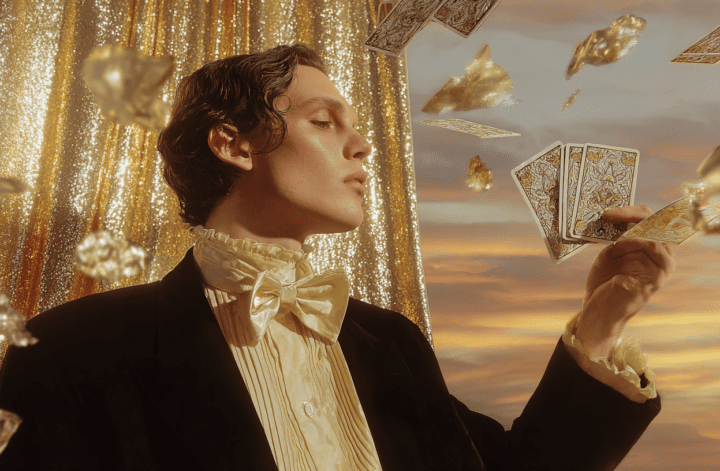
A tarot card is a small picture, but it rarely behaves like one. The Fool can look like a beginning, a risk, a naïve leap, a necessary exit. The Tower can look like collapse, honesty, exposure, relief. The Moon can feel like fear, dream, confusion, instinct, or the strange intelligence of not knowing yet.
Jung gives us one useful way to talk about why these images land so deeply: tarot can be read as a symbolic language of archetypes, inner figures, shadow material, and psychological patterns.
What Jung adds to tarot
Carl Jung was a Swiss psychiatrist whose work became the basis of analytical psychology. The APA Dictionary of Psychology defines Jungian psychology as the psychoanalytic theory and psychotherapy approach associated with Jung. His core ideas include the ego, personal unconscious, collective unconscious, archetypes, and individuation.
For tarot readers, the useful part is not treating Jung as a stamp of authority.
The useful part is language.
Jung gives us words for something many readers already experience: a card can feel personal and impersonal at the same time. It can be about your specific situation, but it also seems to belong to a much older human pattern.
A person standing at the edge of a road. A mother figure. A ruler. A hermit. A collapsing tower. A star after darkness.
Tarot is full of these images. Jungian psychology helps us ask why they feel so familiar.
A beginner’s way to use this
Start with one card and one Jungian question.
Pull one card.
Ask: “What pattern does this image show?”
Notice the figure, setting, object, or mood that catches your attention.
Write your first association.
Turn it into one sentence about your life right now.
Example:
Question: What pattern am I inside right now? Card: The Hermit First reaction: A person alone with a lamp. Reflection: I may need solitude, but I may also be using distance to avoid being seen.
That is a Jungian-style reading in miniature.
Archetypes: why some cards feel ancient
In Jungian psychology, archetypes are not simply “character types.” The APA Dictionary defines an archetype, in Jung’s analytic psychology, as a symbol representing aspects of the psyche derived from the accumulated experience of humankind.
The Library of Congress describes Jung’s archetypes as patterns of behavior or symbolic imagery that appear across dreams, art, fairy tales, myths, religious motifs, and stories. Jung called this shared symbolic layer the collective unconscious.
This is where tarot becomes interesting.
The Magician is not only “a person who manifests.” He can be read as the archetype of agency, skill, attention, and the first act of shaping the world.
The Empress is not only “beauty” or “fertility.” She can be read as the archetype of nourishment, embodiment, abundance, care, and the risk of giving without limit.
The Tower is not only disaster. It can be read as the archetype of collapse when a false structure can no longer hold.
A Jungian tarot reading asks: what archetypal pattern is active here?
That question is richer than “is this card good or bad?”
Symbols: why the image matters more than the keyword
A Jungian approach does not rush to flatten a card into a single meaning.
It stays with the image.
The sword. The cup. The lion. The robe. The water. The gate. The hand reaching from the cloud.
A symbol is not a slogan. It gathers meanings without closing them too quickly.
This is why tarot keywords can be useful but limited. If Strength only means “courage,” the card becomes small. If you actually look at the image — a person placing their hands near a lion’s mouth — the card becomes stranger and more precise.
What kind of courage is this? Is it control? Trust? Restraint? Tenderness toward something wild?
The image can hold all of that.
Shadow: the card you do not want
One of Jung’s most famous concepts is the shadow. The APA Dictionary defines the shadow as an archetype representing the darker side of the psyche, including traits, desires, or emotions that feel unacceptable to the conscious ego and remain hidden or unexpressed.
In tarot, shadow often appears through the card you dislike.
The Devil. Seven of Swords. Five of Pentacles. The Tower. The Moon. Queen of Swords reversed, if you are allergic to directness. The Emperor, if structure feels like control.
A shadow reading does not mean “this card reveals your bad side.”
It means the card may show something you have difficulty admitting, owning, or integrating.
Ask:
What do I dislike about this card? Where does that quality live in me? What would change if I stopped pretending it belonged only to other people?
This can be uncomfortable, so it should be done gently. Shadow work is not a reason to attack yourself. It is a way to notice what has been pushed out of view.
The persona, in Jungian terms, is the public face a person presents to the world. The APA Dictionary describes it as the face shown outward, in contrast with more deeply rooted personality characteristics.
Tarot can make persona visible.
The Queen of Wands can become the competent, magnetic version of yourself you perform even when tired.
The Emperor can become the person who always knows the plan.
The Hierophant can become the role of being good, correct, approved, and legible.
The Six of Wands can become the need to be seen as winning.
A persona is not fake by default. It may help you function. It may protect you. It may be part of your real strength.
The reflective question is:
Where has this role become too tight?
Tarot Told Me on YouTube has guided tarot practices, meditations, and a live stream where you can do a three-card spread in real time. Use it when you want the card to become a calm reflective practice, not another thing to decode alone.
Active imagination: speaking with the card
Jung’s method of active imagination involved engaging with inner images, fantasies, or figures rather than dismissing them too quickly. The Library of Congress notes that Jung recorded his unconscious explorations in notebooks that later formed the basis of The Red Book.
Tarot adapts easily to this kind of reflective exercise.
Choose one figure in the card and ask:
What would this figure say? What does this figure want me to see? What part of me does this figure represent? What does this figure refuse to do?
Example:
Card: Eight of Cups Figure: The person walking away. Question: What are you leaving? Answer: I am leaving the version of this that required me to keep pretending I was satisfied.
This is not fortune-telling.
It is image-based self-inquiry.
You let the card speak, then you decide what is useful, true, exaggerated, or revealing.
Individuation: tarot as a map of becoming
Jung used the term individuation for the development of a more integrated self. The APA summary of analytic psychology describes the ego as gradually developing a unique self through individuation.
This is one reason people connect Jung with the Major Arcana.
The Major Arcana can be read as a sequence of psychic situations: innocence, power, learning, love, disruption, temptation, collapse, healing, awakening, integration.
That does not mean the deck is secretly Jungian.
It means Jungian language gives readers a way to think about the cards as stages, conflicts, and images of inner development.
The Fool’s Journey is especially useful here: not as a literal path everyone follows, but as a story of movement through experience.
A Jungian question for any Major Arcana card might be:
What part of becoming myself does this card show?
The Tarot Told Me app is built for people who want tarot to feel like a reflection space, not a prediction machine. You can ask a question, pull a card, and save what tarot told you as a note to return to later.
Keep the Jungian lens grounded
A Jungian tarot reading can become too grand very quickly.
Suddenly every card is destiny, every symbol is a cosmic message, every small irritation is “the shadow,” and every decision becomes a mythic threshold.
That is not usually helpful. A grounded Jungian reading keeps two scales in view:
The symbolic scale: what larger pattern does this image show? The practical scale: what does this help me notice or do today?
If the reading cannot return to your actual life, it has floated too far away.
Tarot and Jung connect through archetypes, symbols, shadow, persona, active imagination, and individuation. Jungian ideas can help readers use tarot cards as symbolic prompts for self-reflection.
How should beginners use Jungian tarot?
Beginners should pull one card and ask, “What pattern does this image show?” Start with the image, not the guidebook. Write your first association and turn it into one grounded reflection.
Did Jung write about tarot?
Jung is often linked with tarot through his ideas about archetypes and symbols, but it is better to say Jungian psychology offers a useful lens for tarot rather than claiming tarot is a Jungian system.
What is a tarot archetype?
A tarot archetype is a symbolic pattern represented by a card, such as The Fool as beginning, The Emperor as structure, The Hermit as solitude, or The Tower as collapse and revelation.
What is shadow work in tarot?
Shadow work in tarot means using a card to notice qualities, fears, desires, or patterns you may reject, avoid, or project onto others. It should be done gently and should not replace therapy.
Is Jungian tarot therapy?
No. Jungian tarot can support reflection and symbolic thinking, but therapy is a professional relationship with clinical training, ethical standards, and appropriate care.