
Temperance tarot meaning is about balance, patience, healing, and the quiet skill of bringing different parts of life into a healthier rhythm. This card rarely pushes for speed. It asks for adjustment, integration, and a calmer way to move forward.
Temperance often appears when the answer is not “do more” or “choose one extreme.” The answer is usually to blend, slow down, test, and find the middle path that actually works.
What Temperance tarot card means
Temperance is a card of moderation, emotional regulation, harmony, and recovery. It shows the moment when things do not need to be forced. They need to be mixed carefully.
In many decks, an angel pours water between two cups. The image is simple but precise: something is being transferred, balanced, and transformed. Nothing is rushed. Nothing is wasted.
Temperance tarot meaning often points to a process that needs time. You may be combining two roles, two desires, two people, two habits, or two versions of yourself. The card says that the right solution may appear only when you stop treating the situation like a battle.
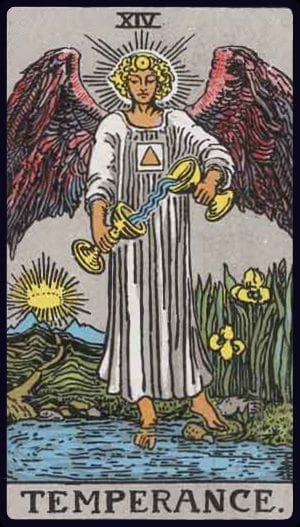
Main themes of Temperance
Temperance can point to:
- balance and moderation
- emotional healing
- patience and timing
- integration of different needs
- calm communication
- gradual progress
- cooperation and compromise
- sustainable routines
This is not a passive card. Temperance is active, but its action is subtle. It is the discipline of not overcorrecting.
Temperance upright meaning
Upright, Temperance suggests that balance is possible, but it will require patience and conscious adjustment.
If you ask about a decision, the card may advise you not to rush. Gather more information. Test a softer approach. Look for a solution that does not create a new problem while solving the old one.
In personal life, Temperance can show recovery after stress. It may suggest that you are slowly returning to yourself. Not in one dramatic moment, but through small repeated choices.
Temperance tarot meaning in an upright position is simple: choose what you can sustain.
Temperance reversed meaning
Reversed, Temperance can point to imbalance, impatience, excess, poor timing, or an attempt to force harmony before the real issue has been named.
You may be swinging between extremes. One day you overcommit, the next day you disappear. You may try to fix everything at once and then feel disappointed when the system collapses.
The reversed card asks where moderation has been lost. It can also point to a need for better boundaries, especially if “keeping the peace” has turned into ignoring your own needs.
Temperance in love and relationships
In love, Temperance tarot meaning often suggests patience, emotional maturity, repair, and a relationship that needs steadier communication.
It can be a good sign for healing after conflict. However, it does not mean pretending everything is fine. Real harmony requires both people to adjust, listen, and take responsibility.
If you are dating, Temperance may advise not to rush intimacy or conclusions. Let the connection reveal itself over time. Chemistry is useful, but consistency tells you more.
Temperance in career and money
In career readings, Temperance points to sustainable work, better processes, collaboration, and long-term thinking.
It may appear when you need to stop working in bursts and build a rhythm that does not drain you. It can also suggest that different skills are ready to come together: strategy and creativity, analysis and intuition, leadership and patience.
With money, Temperance usually supports moderation. Budgeting, gradual saving, and careful decisions matter more than dramatic financial moves.
A realistic example
Anna is trying to build a side project while keeping her full-time job. At first, she works every evening, answers messages late, and tries to launch everything at once.
After two weeks, she is tired and irritated. The project starts feeling like another obligation.
Temperance would not tell her to abandon the idea. It would ask her to change the rhythm. Two focused evenings, one rest day, a smaller launch, and clearer priorities may help more than heroic effort.
The lesson is not “slow is better than fast.” The lesson is: sustainable is better than impressive for one week.
What people often misunderstand about Temperance
The common mistake is treating Temperance as a boring card.
It is not boring. It is difficult in a very adult way. It asks for restraint when you want certainty, patience when you want results, and nuance when you want a clean answer.
Another mistake is confusing balance with equal distribution. Balance does not always mean giving everything the same amount of attention. Sometimes it means knowing what needs more care right now and what can wait.
How to work with Temperance
When Temperance appears, ask what needs to be adjusted rather than solved by force.
Look at your pace. Is it sustainable? Look at your expectations. Are they realistic? Look at your communication. Is it calm enough to create understanding?
Then choose one small correction. Sleep before deciding. Reduce the scope. Speak more clearly. Take a pause before reacting. Combine two approaches instead of defending only one.
Temperance grows through repetition, not intensity.
Questions for reflection
- Where am I moving too fast?
- What part of my life needs more moderation?
- What am I trying to force before it is ready?
- Which two needs can be integrated instead of treated as enemies?
- What would a sustainable next step look like?
Practical advice from Temperance
Do not confuse urgency with importance.
Choose the rhythm you can keep.
Let the situation breathe before you make a final call.
Look for the middle path, but do not use compromise to erase your own needs.
What to read next
- The Best First Tarot Spreads for Beginners
- The Lovers Tarot Card Meaning: Relationships, Choice, Emotional Alignment
- The Hierophant Tarot Card Meaning: Tradition, Learning, Guidance
FAQ
Is Temperance a positive tarot card?
Yes, Temperance is usually positive. It points to healing, balance, patience, and a more sustainable way forward.
What does Temperance mean in love?
In love, Temperance suggests patience, emotional maturity, repair, and calm communication. It can show a relationship that grows through steadiness.
What does Temperance reversed mean?
Reversed, Temperance can point to imbalance, impatience, excess, poor timing, or a need for better boundaries.
What is the advice of Temperance?
The advice is to slow down, adjust carefully, and choose a path that can last.
Final thought
Temperance is the card of quiet correction. It reminds you that not every change needs to be dramatic. Sometimes the most powerful move is to find the pace, mix, and rhythm that lets life become workable again.