
There are moments when life gets loud, and your own voice starts to disappear under the noise. The Hermit often appears in tarot at exactly that kind of moment. Not to pull you away from life forever, but to help you step back long enough to hear yourself again.
The Hermit tarot meaning is usually connected to reflection, solitude, and inner guidance. In most tarot traditions, this card points to a period of quiet searching, where clarity comes not from outside advice, but from honest self-examination.
It is not a card about isolation for its own sake. It is a card about choosing space on purpose. When The Hermit shows up, it often asks a simple but difficult question: what do you know deep down, before everyone else tells you what to think?
What Does The Hermit Represent?
The Hermit represents a search for truth that happens inwardly. It is about stepping away from distraction, slowing down, and paying closer attention to your own thoughts, motives, and values.
In a reading, The Hermit tarot meaning often suggests:
- a need for solitude
- reflection before action
- inner wisdom over outside pressure
- careful evaluation
- emotional or spiritual maturity
This does not mean you need to disappear from the world. It means you may need less noise and more honesty.
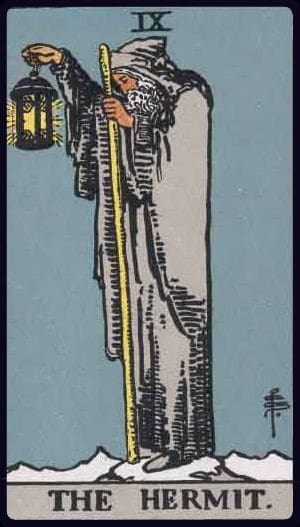
A lot of people first meet this card during a turning point. A relationship changes. Work stops making sense. A decision feels too important to rush. The Hermit does not force an answer. It creates the conditions where an answer can surface.
Symbolism and Key Themes
The symbolism of The Hermit is usually simple, but it carries a lot. In many decks you may see an older figure standing alone, often on a mountain or rocky ground, holding a lantern and a staff. The image tends to feel quiet, stripped down, and deliberate.
Common visual motifs linked with The Hermit include:
- a lantern
- a mountain or high path
- a cloak or robe
- a staff or walking stick
- darkness or night
- a solitary figure
- snow, stone, or bare landscape
Each symbol adds something to The Hermit tarot meaning.
The lantern suggests limited but useful clarity. It does not light the whole road. It lights the next few steps. That matters. Real insight often works like that.
The mountain points to perspective earned through effort. This is not shallow advice or quick comfort. It is wisdom shaped by experience.
The staff suggests support, but not dependence. The Hermit stands alone, yet not without structure.
The darkness around the figure matters too. A common depiction is a quiet night scene, where certainty is partial. You do not see everything. You learn to move anyway.
If the card has a central tension, it is this: solitude can become wisdom, but it can also become withdrawal. The difference lies in whether you are using distance to understand yourself or to avoid life.
The Psychological Meaning of The Hermit
Psychologically, The Hermit often reflects introspection, self-observation, and the need to separate your real feelings from social pressure. It can appear when you are tired of performing certainty. It can also appear when you already know the truth, but have not admitted it yet.
The Hermit tarot meaning is less about finding a magical answer and more about creating enough stillness to notice what is already there.
This card can reflect:
- a need to process before speaking
- healthy boundaries around attention and energy
- emotional independence
- a period of questioning identity or direction
- discomfort with superficial answers
Sometimes people pull The Hermit when they are between versions of themselves. The old role no longer fits. The new one is not clear yet. That in-between space feels lonely, but it can also be honest.
What tarot told me in moments like that was not what would happen next, but what I had been avoiding naming.
The Hermit in Love, Career, and Personal Growth
The Hermit changes shape depending on the context, but its core stays steady. It asks for honesty, space, and deeper thought.
In love
In relationships, The Hermit tarot meaning can suggest distance, reflection, or emotional reserve. That does not always mean something is wrong. Sometimes it points to the need for slower, more thoughtful connection.
It may reflect:
- taking time before committing
- needing emotional space
- reassessing relationship patterns
- choosing depth over intensity
If you are in a relationship, this card can ask whether silence between you is peaceful or avoidant. If you are single, it may point to a period where understanding your own needs matters more than chasing attention.
In career
At work, The Hermit often appears when you need to step back and think strategically. It can suggest research, independent work, a quieter path, or a reassessment of what success actually means to you.
It may show up when:
- you need focus more than visibility
- a job no longer matches your values
- you are learning through observation
- you need to trust your own judgment
This is not always a card of momentum. Sometimes it is a card of refinement. Not every season is for expansion. Some are for depth.
In personal growth
For personal development, The Hermit tarot meaning is often strong and direct. It points to self-knowledge, patience, and the kind of truth that becomes clearer when you stop rushing to explain yourself.
This card asks: what changes when you stop looking for permission?
A Real-Life Moment with The Hermit
A woman in her thirties had been saying yes to everything for months. Extra work. Family obligations. Social plans she did not want. On the surface, nothing looked wrong. She was functioning, productive, and polite. Then one evening she sat in her kitchen after another long day and realized she had not made one decision that week based on what she actually felt. When she pulled The Hermit, the card did not seem dramatic. It felt accurate. She did not need a new life. She needed one quiet weekend, a notebook, and enough distance to hear her own thoughts again.
What this moment shows:
- Her problem was not failure. It was disconnection from herself.
- The Hermit did not ask for escape. It asked for pause and honesty.
- The turning point came when she stopped reacting and started reflecting.
That is why The Hermit can feel so sharp. It often names a quiet form of exhaustion that other cards might miss.
When The Hermit Feels Supportive
The Hermit can be deeply steadying when solitude becomes a tool rather than a wall.
It may feel supportive when you are:
- taking time to think before making a major choice
- protecting your energy from constant noise
- learning to trust your own judgment
- choosing depth over speed
When The Hermit Feels Blocked
The same energy can become heavy if reflection turns into avoidance.
It may feel blocked when you are:
- withdrawing because you fear being seen
- overthinking instead of deciding
- confusing loneliness with wisdom
- using distance to avoid necessary conversation
This is where The Hermit tarot meaning becomes more nuanced. Time alone can heal, but too much distance can harden into disconnection.
Reflection Questions for The Hermit
The Hermit is a strong card for tarot journaling because it invites honesty without drama. It works best when you answer slowly and without trying to sound wise.
You could ask yourself:
- Where in my life do I need less input and more clarity?
- What am I learning from being alone right now?
- Am I stepping back to reflect, or hiding to avoid discomfort?
- Which truth already feels clear, even if I have not acted on it yet?
- What would inner guidance sound like if I trusted it more?
One way to deepen a reflective tarot practice is to return to the same question over several days instead of demanding instant certainty.
How to Reflect on The Hermit
The Hermit becomes more useful when you treat it as a practice, not just an interpretation. Pulling the card is one moment. Listening to what it reveals takes longer.
A simple way to work with it:
- Sit with the card for two quiet minutes before reading anything about it.
- Write down the first emotion or memory it brings up.
- Notice where you are craving silence, distance, or perspective.
- Ask what needs to be clarified before your next move.
- Revisit your notes after a day or two.
This is also where structured tools can help, especially if you want to keep your insights somewhere consistent. Tarot Told Me is a reflective tarot app designed to help explore situations through symbolism, inner dialogue, and mindful reflection. Used that way, a daily card or short journal entry becomes less about getting answers and more about tracking what keeps asking for your attention.
You might also notice connections with other cards over time. The High Priestess explores inner knowing in a quieter, more intuitive way. The Moon looks at uncertainty and emotional undercurrents. The Four of Swords shares some of The Hermit’s stillness, but focuses more on rest than insight.
Further Reading
- How to Start Reading Tarot Without Feeling Overwhelmed
- The High Priestess Tarot Card Meaning: Intuition, Mystery & Inner Wisdom
- The Magician Tarot Card Meaning: Skill, Focus & Personal Power
Frequently Asked Questions
What does The Hermit mean in tarot?
The Hermit usually means reflection, solitude, and inner guidance. It often points to a need for space, honesty, and slower thinking.
Is The Hermit a positive or negative card?
It is neither, by itself. The Hermit tarot meaning depends on context. It can be grounding and wise, or it can point to withdrawal and disconnection.
What does The Hermit mean in love?
In love, The Hermit often suggests emotional reflection, distance, or the need for deeper self-understanding before moving forward.
What does The Hermit reversed mean?
Reversed, The Hermit may suggest avoidance, isolation, or resistance to introspection. It can also point to staying alone longer than is helpful.
How can I reflect on The Hermit in daily life?
Start by reducing noise. Journal, take a quiet walk, or sit with one honest question. The card works through attention, not urgency.
The Hermit tarot meaning stays relevant because it speaks to a problem many people know well: living so close to noise that your own perspective gets lost. This card does not promise comfort or quick certainty. It offers something more useful — a quieter space where the next true thought can finally be heard.