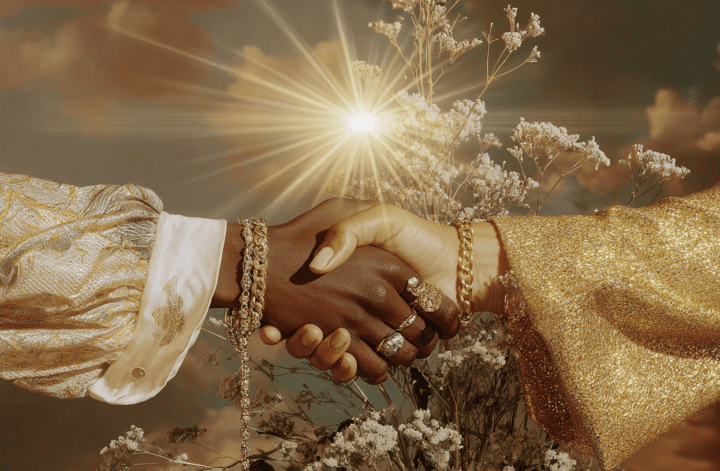
The Star reversed often appears when hope is still present, but harder to feel. Upright, The Star is usually read as healing, renewal, grace after difficulty, and the quiet return of trust. Reversed, the card does not necessarily mean that hope is gone. It may mean hope has become blocked, private, tired, delayed, or difficult […]
The High Priestess Tarot Card as a Jungian Archetype
The High Priestess tarot archetype begins where action becomes too loud. After The Magician, with his table, tools, language, gesture, and will, The High Priestess is almost suspiciously still. She does not perform. She does not explain. She does not rush to make the invisible useful. She sits at the threshold and keeps her own […]
Tarot and Psychology: Why Cards Feel So Personal
Tarot and psychology meet in a surprisingly ordinary place: an image on a table, a person looking at it, and a question that refuses to stay abstract. A tarot card gives the mind something to answer. Not a command. Not a verdict. A scene. You see a figure, a color, a gesture, a cup, a […]
Tarot Reflection Prompts for Decision-Making
Tarot reflection for decisions can help when you are stuck between options and keep circling the same question. The card is not there to choose for you. It gives you a visual prompt for noticing what you already know, what you fear, and what tradeoff you may be avoiding. A good decision reading should make […]
What to Write After a Tarot Reading: A Simple Reflection Guide
After a tarot reading, write down your question, the cards, your first reaction, a few keywords, one or two lines of reflection, and a takeaway. This keeps the reading grounded and useful. Quick answer: question → cards → first reaction → 3 – 5 keywords → short reflection → one small next step. Many people […]
Why Journaling Helps: The Psychology of Writing Things Down
Journaling can help people name emotions, organise confusing experiences, notice patterns, and create distance from repetitive thoughts. It works best as a structured reflection practice rather than a demand to write everything down or “think positively.” The effects are usually modest, not magical. Writing does not solve every problem, and it is not a replacement […]
How to Do a Daily Tarot Card Pull for Self-Reflection
A daily tarot card pull is a simple practice: ask one open question, draw one card, notice your reaction, and write down one useful thought. You can use it for self-reflection without treating the card as a prediction or instruction. A single card gives your attention somewhere to land. Instead of trying to solve your […]
Good tarot questions are closer to coaching than fortune-telling
Good tarot questions help you understand a situation, notice patterns, and decide what to do next. They work less like fortune-telling and more like coaching prompts because they keep the final choice with you. Instead of asking, “Will this relationship work out?”, you might ask, “What pattern am I repeating in this relationship?” The second […]
Tarot and Journaling: How to Use Cards as Writing Prompts
Tarot and journaling work well together because a tarot card gives your writing a starting point. Instead of staring at a blank page and trying to explain your whole life, you begin with one image, one question, one reaction, and one honest sentence. That is the simplest way to use tarot and journaling: pull a […]
How to Use Tarot for Self-Reflection Without Trying to Predict the Future
Tarot for self-reflection means using cards as prompts for better questions, not as fixed predictions about your future. Instead of asking what will happen, you use the image, symbols, and your first reaction to notice what you already feel, avoid, want, or need to think through. This is why tarot can feel useful even if […]