Estimated reading time: 15 minutes
Table of contents
- How Tarot Actually Helps with Self-Discovery
- Why prediction is usually the least helpful way to use tarot
- Tarot can help because it makes you pause
- Tarot is often revealing because the images are open-ended
- Sometimes the real benefit is emotional language
- Why symbols can matter without being literally true
- Interesting articles:
- Tarot can help people make sense of the story they are in
- What tarot can genuinely help with
- What tarot cannot do
- The beginner mistake that quietly ruins tarot
- Better questions make better readings
- Mini-guide: how to use tarot for reflection, not prediction
- FAQ
- Final thought
Key Takeaways
- People turn to tarot for clarity in their lives, rather than for predictions of the future.
- Tarot helps individuals reflect on their emotions and situations by creating a pause in their thought processes.
- Instead of seeking guaranteed outcomes, better questions in tarot lead to deeper insights and understanding.
- Tarot’s symbolism allows for personal interpretation, revealing emotions and conflicts that may remain unacknowledged.
- Using tarot for self-reflection encourages a more honest assessment of one’s circumstances, fostering growth and awareness.
How Tarot Actually Helps with Self-Discovery
Most people come to tarot for the same reason they open a notes app at 1 a.m. or call a friend and say, “I need to talk.”
They want clarity.
Not in an abstract, spiritual way. In a painfully ordinary way. They want to know what is going on in a relationship. Whether they are reading a situation wrong. Whether they are stuck, avoiding something, hoping for something unrealistic, or making a decision they will regret.

That is usually the moment tarot gets misunderstood.
Because tarot is often sold as a way to know what will happen next. And once you start there, everything gets warped. The cards become less like a tool for reflection and more like a machine for certainty. People stop asking better questions and start asking for guarantees.
That is where tarot tends to become least useful.
A more honest starting point is this: tarot may help not because it predicts the future, but because it helps people slow down, notice what they are feeling, put language around something vague, and see their situation from a different angle. It can help because it creates a moment of focus in the middle of mental noise. It can help because symbols sometimes make it easier to admit what plain language does not.
As psychologist Arie Kruglanski has written, people often feel a strong “desire for certainty.” That matters here, because tarot becomes least useful when it is used to shut uncertainty down instead of helping someone think more clearly.
That is a quieter claim than “the cards know.” But it is also a stronger one.
Tarot does not need to predict the future to be meaningful. Sometimes it is useful for a simpler reason: it helps people see what is already happening inside them.
Why prediction is usually the least helpful way to use tarot
The problem with prediction is not just that it may be unreliable.
The bigger problem is what it does to the person asking.
When someone turns to tarot in prediction mode, they are usually not looking for reflection. They are looking for relief. They want the tension of not knowing to go away. They want the cards to tell them what is going to happen so they can stop spinning.
That urge is deeply human. It is also where tarot can turn into a trap.
Questions like “Will this relationship work out?” or “Am I going to get the job?” sound simple. But they often come from the part of the mind that wants certainty more than insight. And certainty is exactly what tarot is bad at providing in a healthy way. If the answer feels comforting, people cling to it. If it feels scary, they panic. If it feels unclear, they pull more cards. Then more cards. Then another spread “just to confirm.”
At that point, tarot is not helping someone think. It is helping them check.
And checking does not usually bring peace. It brings a short burst of relief, followed by the urge to check again.
That is why tarot often becomes more useful when it stops trying to answer “What will happen?” and starts asking “What am I not seeing clearly?”
That shift changes the whole tone of a reading.
The cards stop acting like a judge. They start acting like a mirror.
Tarot can help because it makes you pause
Before tarot becomes profound, it usually does something smaller.
It makes you stop.
That matters more than it sounds.
A lot of everyday distress happens at speed. Fast thoughts. Fast assumptions. Fast emotional reactions. A half-formed fear becomes a whole internal movie in about six seconds. A text gets ignored, and suddenly the mind is writing a script about rejection, betrayal, abandonment, or disaster.
Tarot can interrupt that pace. Not magically. Structurally.
You shuffle. You lay out the cards. You look. You sit with an image instead of racing straight into a conclusion. Even that simple sequence can shift the mood of your thinking. It moves you, for a moment, out of reactivity and into observation.
That pause matters. The psychologist John Flavell, who helped define the idea of metacognition, described it as thinking about one’s own thinking. In that sense, a reading can be useful not because the cards speak, but because they interrupt autopilot long enough for self-observation to begin.
That is one of the most believable ways tarot helps. Not because a card descends from the heavens with secret information, but because the ritual itself slows mental momentum. It creates a pause between feeling and interpretation.
And sometimes that pause is the thing people were missing all along.
Sometimes the first useful thing a reading gives you is not an answer. It is enough stillness to hear yourself think.
Tarot is often revealing because the images are open-ended
One of the strangest things about tarot is also one of the simplest.
Two people can look at the same card and see completely different things.
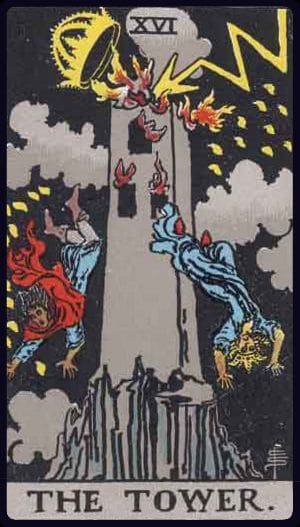
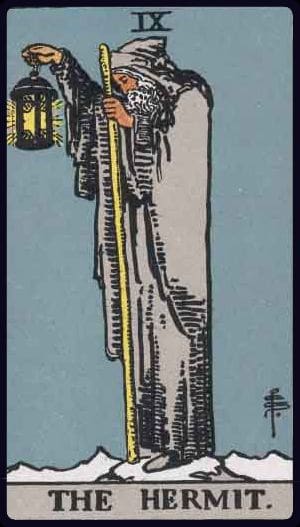
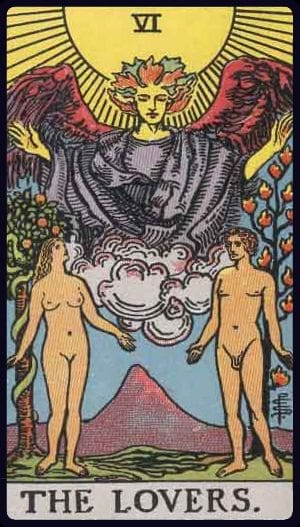
One person sees the Tower and thinks collapse. Another sees release. One person sees the Hermit and feels loneliness. Another feels relief. One person sees the Lovers and thinks romance. Another thinks conflict, choice, longing, values, or divided loyalty.
That does not weaken tarot. It explains it.
Tarot cards are powerful partly because they are not narrow. They leave space for projection, association, emotional reaction, and personal meaning. The useful part is not only the symbol itself. It is what the symbol stirs up in the reader.
That is why a card can feel uncannily personal even when it is not “objectively” saying one thing. The card is not doing all the work. Your mind is meeting it halfway. Sometimes more than halfway.
Seen that way, tarot works less like a message arriving from outside and more like a structured encounter with your own interpretation. That is often where the insight is. Not in the card as a fixed truth, but in your reaction to it.
A useful way to think about this comes from self-perception theory. Social psychologist Daryl Bem argued that people often learn about themselves by noticing their own reactions. Tarot can work in a similar way: the card matters, but your response to the card may matter even more.
What are you drawn to immediately? What do you resist? What meaning do you assign without even noticing? What feels obvious to you, and why?
Those are not small questions. They can tell you a lot.
Sometimes the real benefit is emotional language
A lot of people do not need an answer first.
They need words.
That may sound minor, but it is not. Some of the hardest emotional states are hard precisely because they are blurry. The problem is not always that a person has no feelings. It is that their feelings are tangled, half-conscious, or too vague to work with.
“I feel off.”
“I feel weird.”
“I feel bad.”
“I don’t know what is wrong.”
That is where tarot can sometimes help in a very grounded way. It gives people a structure for naming experience. A card becomes a way to say: this is grief. This is anger. This is avoidance. This is fear disguised as caution. This is longing mixed with shame. This is not confusion at all. This is a conflict between what I want and what I think I am allowed to want.
Once a feeling becomes more specific, it becomes more workable.
That idea has real psychological weight. Researcher Matthew Lieberman, writing about affect labeling, argued that putting feelings into words can change how intensely they are experienced. Tarot does not need to be magical for that to matter. Sometimes it helps because it gives a person language before it gives them clarity.
“I feel terrible” is a wall.
“I feel resentful, exposed, and tired” is a doorway.
That is one of the most realistic explanations for why tarot can feel helpful. It may offer language before it offers clarity. And language itself can be clarifying.
Sometimes a reading does not solve the problem. It names it. And that can be the first real step.
Why symbols can matter without being literally true
This is where a lot of discussions about tarot go off the rails.
People assume there are only two options. Either the cards are literally true, or the whole thing is meaningless.

But human beings do not live by literal truth alone. People think in stories, metaphors, images, patterns, archetypes, scenes, and emotional shorthand. They always have. Symbolic thinking is not a glitch in the system. It is part of how people make sense of complicated experience.
The psychologist and thinker Jerome Bruner made a similar point when he wrote that people organize experience through narrative. That helps explain why symbolic systems can feel meaningful even without making literal truth claims: a symbol can give shape to experience before it gives certainty.
A symbol can be useful without being factual. A metaphor can change how a person sees a situation. A story can create enough distance to make something painful easier to understand. Tarot works in that territory.
A card does not have to be “supernaturally right” to help someone recognize something.
The Tower might help a person admit they have been living in denial.
The Hermit might help them see they are not lonely, just withdrawn.
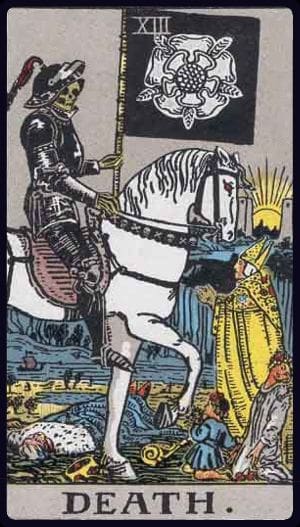
Death might help them name an ending they have been refusing to call an ending.
The Lovers might reveal that the real issue is not romance, but choice.
That is not proof. It is framing.
And framing matters more than people think. The way a situation gets framed changes what becomes visible inside it.
The healthiest way to use tarot is to treat the spread as a lens, not a verdict. A lens helps you see something. A verdict tells you what reality is. Those are very different things.
Interesting articles:
- Major Arcana vs Minor Arcana: What Beginners Need to Know
- How to Shuffle Tarot Cards and Ask a Clear Question
- The Best First Tarot Spreads for Beginners
- How Many Cards Should You Pull in a Tarot Reading?
- How to Start Reading Tarot Without Feeling Overwhelmed
Tarot can help people make sense of the story they are in
When life gets messy, people naturally start narrating.
Psychologist Dan McAdams describes identity in part as an “internalized and evolving life story.” That idea fits tarot unusually well. A spread can help someone move from raw emotion to narrative structure: conflict, turning point, pattern, choice, next chapter.
They ask themselves what kind of chapter this is. A crisis. A transition. A warning. A beginning. A repeat of an old pattern. A moment they will look back on later and understand differently.
That instinct is not random. People make sense of life through story. Tarot often taps into that process almost automatically. A spread turns an abstract emotional mess into something with images, tension, movement, contrast, and possible direction.
That can be surprisingly useful.
When everything feels shapeless, story gives shape.
When everything feels emotionally loud, story gives structure.
When everything feels stuck, story suggests motion.
This is one reason tarot can be clarifying even for people who do not think of themselves as mystical. A reading can help someone move from “Everything is a mess” to “I think I know what kind of mess this is.” That is not trivial. That is often the beginning of self-honesty.
The point is not to discover some perfect hidden script. It is to notice what story you are already telling yourself, and whether it still fits.
What tarot can genuinely help with
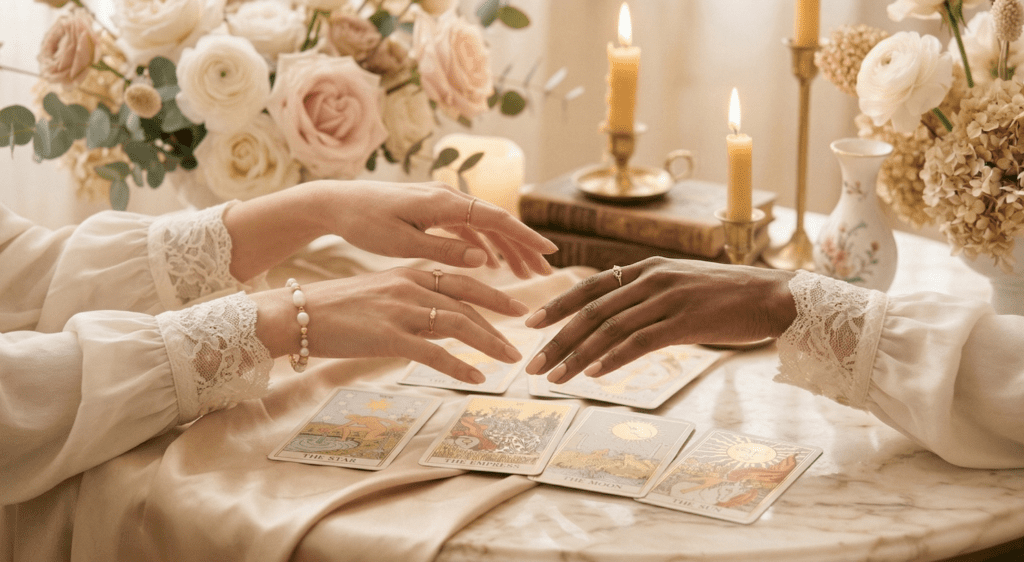
Used well, tarot can help with a few things that are real and practical.
It can help you sort through an emotional state that feels muddy.
It can help you notice a value conflict you have not named yet.
It can help you step back from a situation and look at it from another angle.
It can help you generate options when your thinking feels narrow and trapped.
It can help you stop circling the same feeling and start turning it into language, reflection, and action.
That is a solid use case. It is also enough.
Tarot does not need to do everything to do something.
A good reading might leave you with questions like these:
What am I avoiding here?
What truth already feels obvious, but inconvenient?
What value matters most right now?
What story am I telling that keeps me stuck?
What would a more honest next step look like?
Those questions are useful because they return you to your own judgment. They do not outsource your life to the deck. They sharpen your attention.
What tarot cannot do
This part matters.
Tarot cannot turn resonance into evidence.
It cannot reliably predict complicated future outcomes.
It cannot make your biases disappear.
And it absolutely should not replace direct communication, real-world judgment, or professional advice in serious areas like health, safety, law, or money.
A reading can feel deeply accurate and still be shaped by pattern-seeking, wishful thinking, selective attention, or fear. That does not mean every meaningful reading is fake. It means intensity is not proof.
This is where skepticism is healthy. Raymond Nickerson, writing about confirmation bias, showed how easily people notice the hits, reinterpret the misses, and protect the version of events they already want to believe. Tarot is not immune to that. No reflective tool is.
Something can feel true because it touches a real emotional nerve.
Something can also feel true because the mind is extremely good at connecting dots.
Both things can happen at once.
That is why tarot is healthiest when it is used with a bit of humility. You do not have to flatten it into cynicism. You also do not have to inflate it into cosmic certainty. There is a middle ground. That is where the interesting part is.
A useful reading should open thought, not close it.
The beginner mistake that quietly ruins tarot
The most common misuse of tarot is not dramatic.
It is repetitive.
A person asks a question. The answer does not fully calm them down. So they ask again. Or they ask the same thing in a slightly different way. Or they pull a clarifier. Then another. Then a final card “just to make sure.”
At that point, the reading is no longer about reflection. It is about soothing anxiety. And soothing anxiety through repeated checking usually makes the anxiety stronger in the long run, not weaker.
Research on reassurance-seeking helps explain why this matters. The problem with repeated checking is not only that it becomes exhausting. It also trains the mind to depend on another round of reassurance instead of learning how to tolerate uncertainty. Tarot can easily slide into that role if a person is not careful.
This is one of the clearest boundaries beginners need.
If tarot is helping you think more honestly, it is probably helping.
If tarot is making you less able to tolerate uncertainty, it is probably not.
That is why stopping matters. A reading should have an ending. Without that, the deck becomes less like a tool and more like a slot machine for reassurance.
Better questions make better readings

A lot of beginner frustration comes down to question design.
Weak tarot questions usually demand certainty.
Better tarot questions create space.
Instead of asking the cards to deliver an outcome, you ask them to help you understand a dynamic, a blind spot, a feeling, or a choice. That shift sounds small, but it changes the entire reading.
Here is what that looks like.
Instead of: Will this relationship work out?
Ask: What do I need to understand about the dynamic between us?
Instead of: Am I going to get the job?
Ask: What should I focus on as I move through this opportunity?
Instead of: Is this person lying to me?
Ask: What am I sensing clearly, and what am I filling in from fear?
Instead of: What will happen next?
Ask: What possibilities are emerging, and what depends on my choices?
Instead of: Should I leave?
Ask: What truth am I avoiding about this situation?
Good tarot questions do not pin your whole life on a card. They bring your attention back to what you can examine, understand, and act on.
Mini-guide: how to use tarot for reflection, not prediction
1. Ask a question that opens thought
Start with “what” or “how,” not “will.”
Try to ask for clarity, not certainty.
2. Keep the spread small
One to three cards is usually enough.
More cards often mean more noise, not more insight.
3. Look before you interpret
Notice your first reaction before grabbing a guidebook.
What feels obvious?
What makes you uncomfortable?
What are you already assuming?
4. Translate the cards into plain language
Do not stay in tarot-speak.
Move from symbolic language into real-life language.
Not: “The Tower means disaster.”
More like: “Something unstable may need to be faced honestly.”
5. Ask what the reading points toward in real life
What conversation needs to happen?
What truth needs to be admitted?
What action needs to be taken?
What pattern needs to stop?
6. Write for five minutes
Journal what feels true, what feels exaggerated, and what remains unclear.
That last one matters. A useful reading does not have to erase all uncertainty.
7. Stop
Do not keep pulling cards until you feel fully soothed.
That is usually the moment the reading stops being helpful.
FAQ
Yes. It can still be useful as a reflective tool. A reading may help you slow down, clarify what you feel, notice a pattern, or think through a situation more honestly.
Because the images are emotionally loaded and open enough for people to connect them to real concerns in their lives. That can lead to genuine insight, but it can also lead to overreading. Both are possible.
Sometimes. It can help create a pause and give language to what you are feeling. But it can also become a reassurance habit if you keep using it to check the same fear over and over.
No. Tarot is not therapy, and it is not a clinical tool. But some of the ways people use it overlap with familiar psychological processes like reflection, emotional labeling, perspective shifts, and meaning-making.
Use it like a journal prompt, not like an all-knowing authority. Ask open questions, keep readings small, pay attention to your own reactions, and end by bringing the insight back into real life.
It should not replace medical, legal, financial, or safety-related judgment. It is also a bad idea when you are using it compulsively to calm panic instead of facing uncertainty directly.
Final thought
The most interesting thing about tarot may not be whether it can tell you what happens next.
It may be whether it can help you become more honest about what is happening now.
That is a quieter promise. But it is also a more believable one.
The psychiatrist and thinker Donald Winnicott once wrote about an “intermediate area” between inner and outer reality, the space of play, imagination, and symbolic experience. Tarot often lives there. Not as proof. Not as pure fantasy. But as a human way of working with what is not yet fully clear.
Used carefully, tarot can help people pause, notice, name, and reflect. It can turn a blur into a question, a question into language, and language into a more grounded next step. That is not fortune-telling. It is something more modest, and often more useful.
This article was prepared by the Tarot Told Me team — a reflective app for uncertain moments, powered by symbolic card readings.Researchers and ideas behind this article
Arie Kruglanski — certainty / closure
“Need for closure is the desire for certainty.”
Source: The Need for Closure Scale (NFCS) (Arie Kruglanski)
John Flavell — metacognition
“Thinking about thinking.”
Source: Metacognition: a key to unlocking learning (NSW Education)
Daryl Bem — self-perception
“Individuals come to ‘know’ their own attitudes, emotions, and other internal states partially by inferring them from observations of their own overt behavior.”
Source: Self-Perception Theory (ResearchGate)
Matthew Lieberman — affect labeling
“Putting feelings into words may diminish emotional reactivity.”
Source: Putting Feelings Into Words (Sage Journals)
Jerome Bruner — narrative
“We organize our experience and our memory of human happenings mainly in the form of narrative.”
Source: The Narrative Construction of Reality (Penn English Department)
Dan McAdams — narrative identity
“Narrative identity is a person’s internalized and evolving life story.”
Source: Narrative Identity (Sage Journals)
Donald Winnicott — transitional space
“This intermediate area of experience…”
Source: Transitional Objects and Transitional Phenomena (web-facstaff.sas.upenn.edu)
Raymond Nickerson — confirmation bias
“Seeking or interpreting of evidence in ways that are partial to existing beliefs, expectations, or a hypothesis in hand.”
Source: Confirmation Bias: A Ubiquitous Phenomenon in Many Guises